For decades, packaging has mainly played a passive role in protecting and transporting products. However, the development of water-soluble film technology has changed this concept. Packaging is no longer only a container; it can become an active part of the product delivery process.
Among different water-soluble materials, PVA (Polyvinyl Alcohol) film has become one of the most important materials because of its excellent film-forming ability, water solubility and compatibility with various formulations. With the development of unit dose products, PVA film has created new possibilities for the cleaning industry.
The Evolution of Water-Soluble Film Technology
Water-soluble film technology has been developed for many years and has been applied in different industries where controlled dissolution and precise delivery are required.
However, the most significant commercial breakthrough came when water-soluble film was combined with household cleaning products.
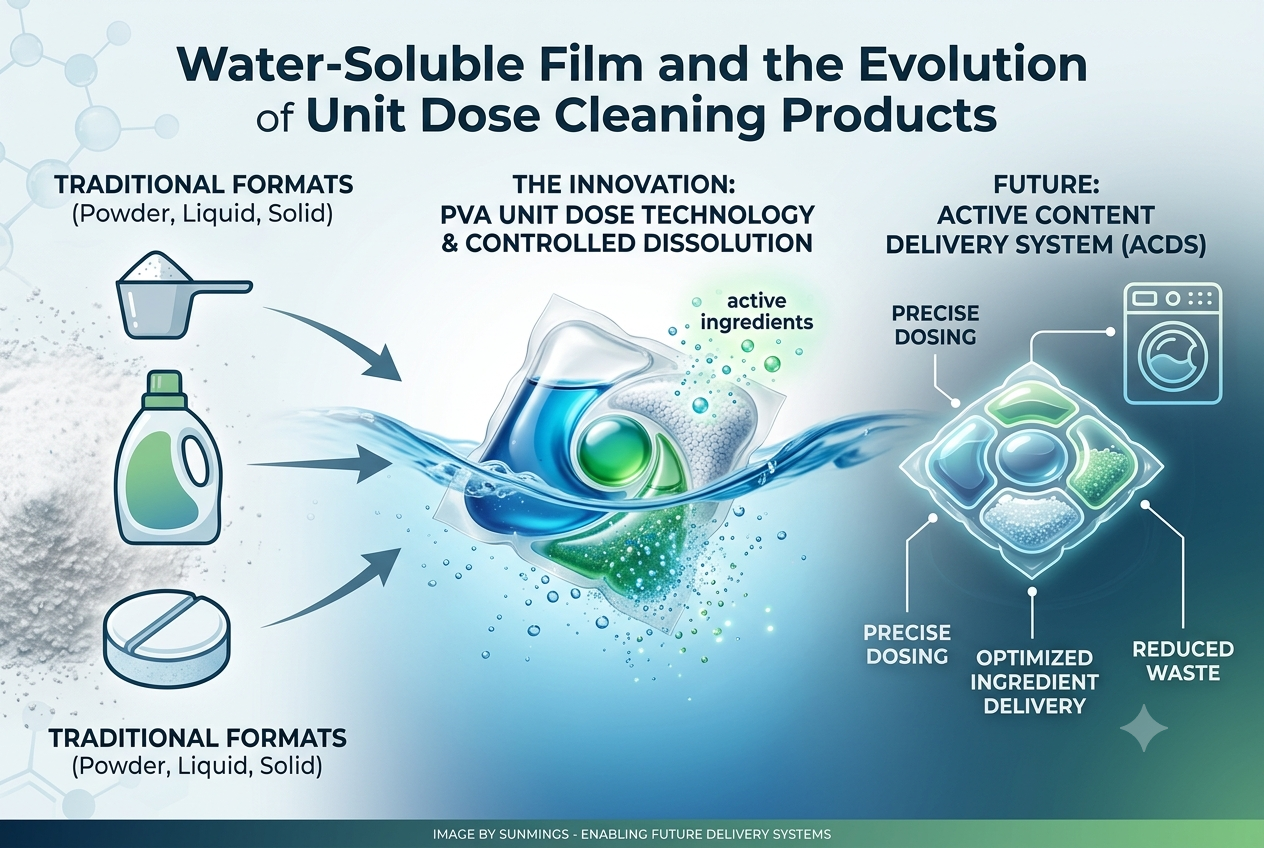
Before the emergence of laundry pods and dishwasher capsules, cleaning products mainly existed in three forms: powder, liquid and solid products. Each format had its own advantages, but they were also limited by their physical form.
Powder products required manual measurement. Liquid products required larger packaging and transportation volume. Solid products had limitations in formulation flexibility.
Water-soluble film provided a new solution by combining precise dosing with convenient product delivery.
Water-Soluble Film and the Rise of Laundry Pods
The combination of PVA film and unit dose technology created an entirely new product category: laundry pods and dishwasher capsules.
At first glance, pods appear to be a more convenient package. However, the deeper innovation is not only convenience. The real value is the creation of a precise active ingredient delivery system.
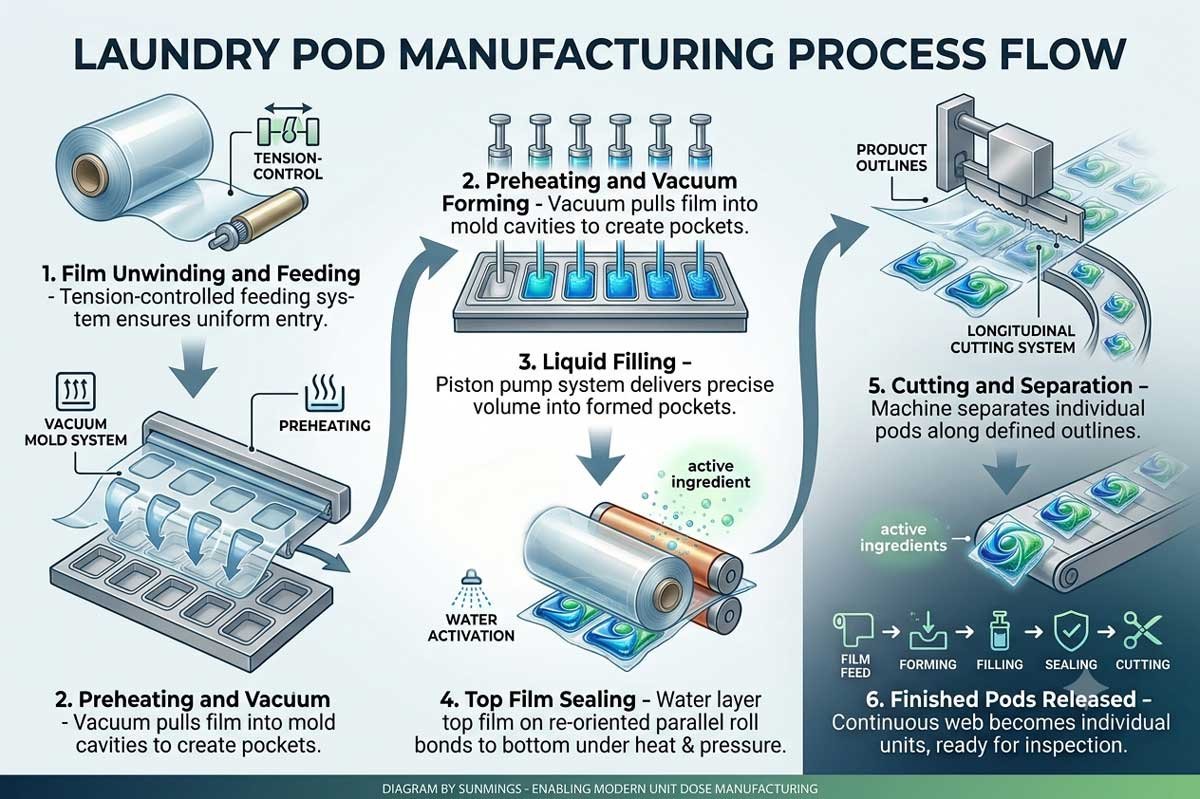
By combining water-soluble film, formulation technology and manufacturing precision, each pod becomes a controlled unit that delivers the correct amount of cleaning ingredients directly into the washing process.
This changed the relationship between product formulation and packaging. The package itself became part of the product performance.
Beyond Single Formulations: Multi-Component Unit Dose Products
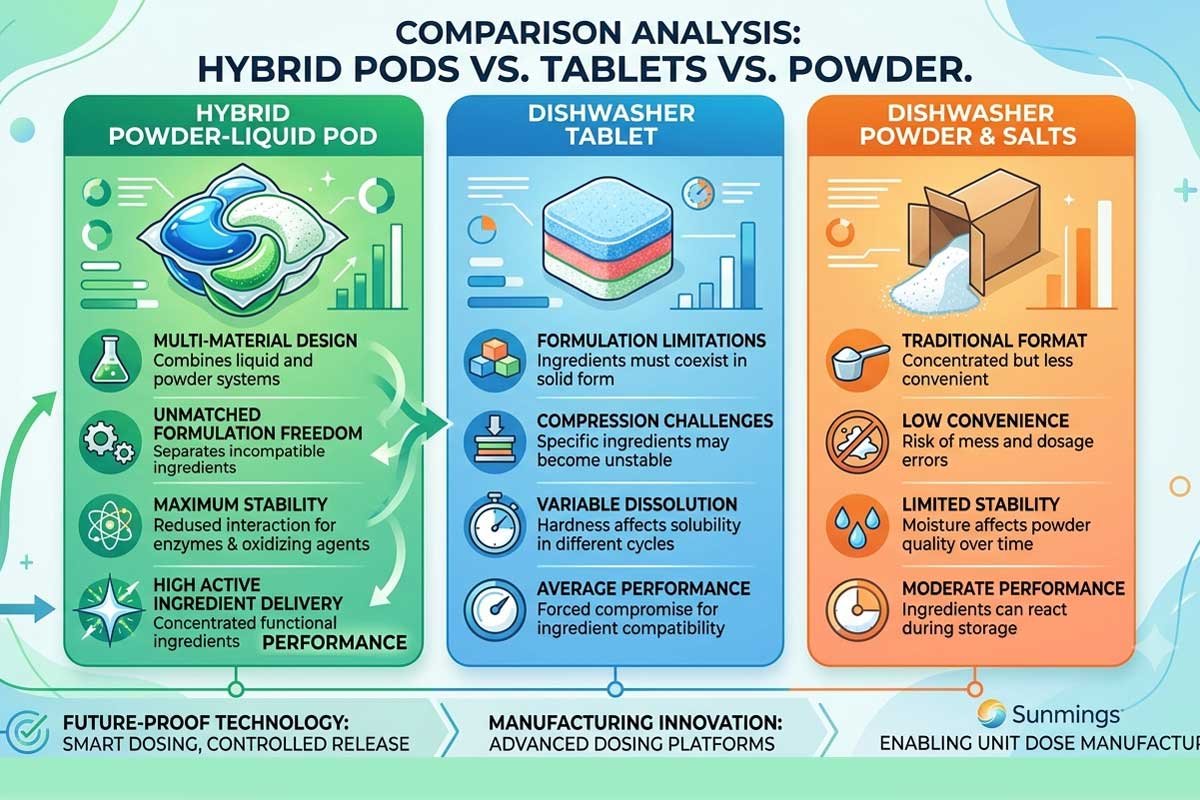
Traditional detergents usually require all ingredients to remain stable together inside one formulation. This creates limitations because some active ingredients may affect each other or require different conditions for optimal performance.
Unit dose technology provides a different approach.
Through multi-compartment structures and advanced manufacturing technology, different materials can exist independently until the moment of use.
This allows manufacturers to combine different material forms, including liquids, powders and granules, within one product.
Future products may include higher-performance powder-liquid combinations, multi-chamber systems and controlled-release structures. These technologies can improve ingredient stability, enhance cleaning performance and create functions that are difficult to achieve with traditional detergent formats.
From Unit Dose Products to Active Content Delivery Systems
The future development of water-soluble film is not limited to making smaller packages or more convenient detergents.
The next stage is the evolution from unit dose products toward a broader technology platform: ACDS — Active Content Delivery System.
ACDS represents the integration of materials, formulation, manufacturing technology and intelligent delivery systems. Its purpose is to deliver active ingredients in the most efficient way:
The right ingredients, the right amount and the right timing.
In this vision, unit dose products are not simply detergents wrapped in film. They become intelligent carriers that control how active ingredients are stored, transported and released.
The Future Connection Between Unit Dose and Smart Cleaning Systems
As household appliances become more intelligent, cleaning systems will require more precise and efficient ways to deliver active ingredients.
Future cleaning systems may combine smart devices with unit dose products to achieve automatic recognition, accurate dosing and optimized cleaning programs.
Compared with traditional products, this approach can reduce unnecessary consumption and minimize process losses throughout the entire supply chain.
The value of unit dose technology is not only reducing packaging size. It is improving the efficiency of the entire cleaning process.
Why PVA Still Has Significant Potential
Some technologies are replaced when new solutions appear. However, PVA film continues to demonstrate strong potential because its properties match many future requirements of intelligent delivery systems.
Its advantages include excellent water solubility, flexible processing capability and compatibility with different formulations.
More importantly, PVA provides a foundation for future innovation. Combined with advanced formulations, new product structures and intelligent manufacturing systems, PVA can support applications far beyond today's laundry pods and dishwasher capsules.
Sunmings: Building the Manufacturing Foundation for Future Delivery Systems
At Sunmings, we believe unit dose technology represents a fundamental change in how cleaning products are designed and delivered.
Our mission is to provide manufacturing technologies that support this transformation.
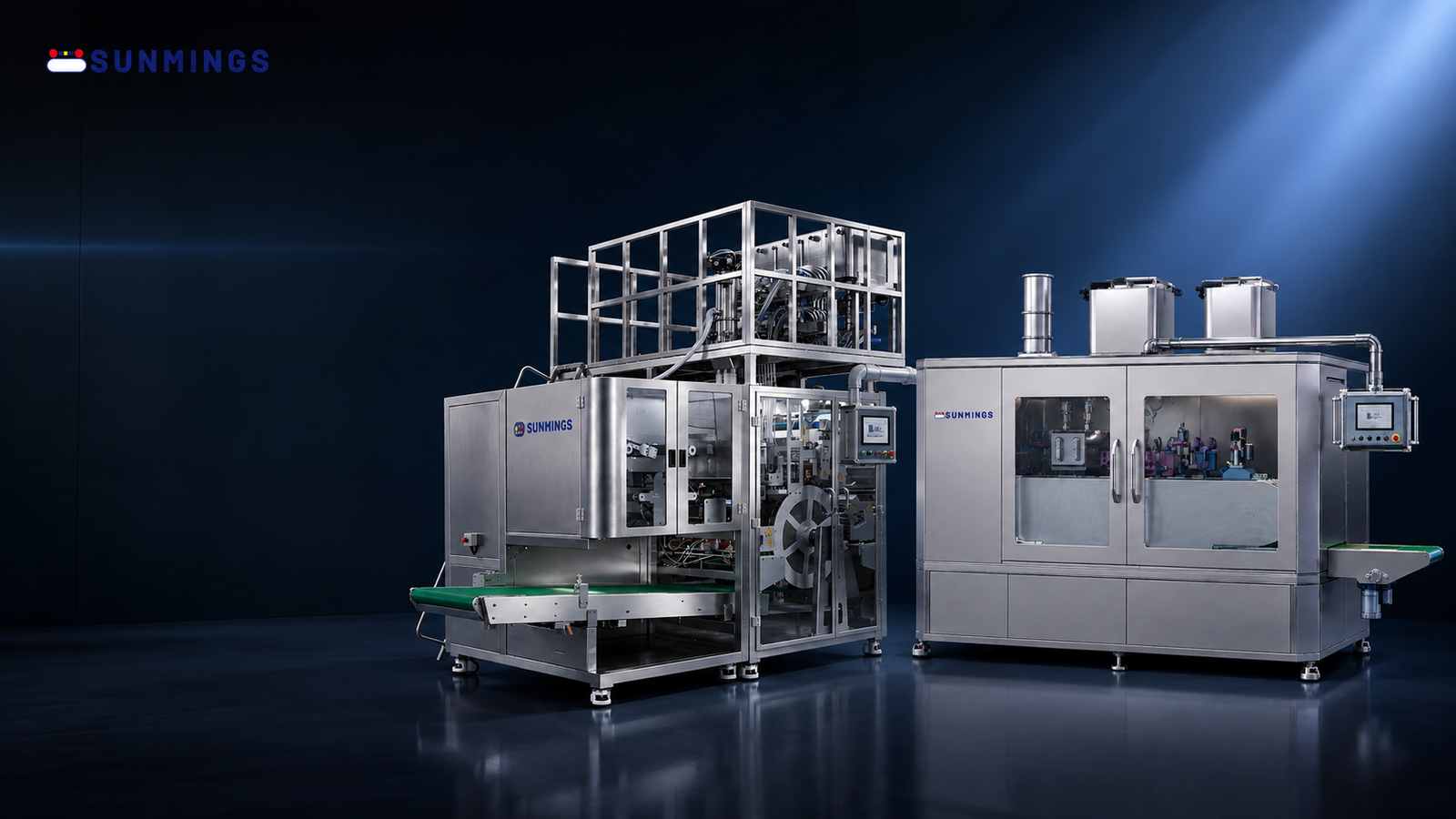
Through advanced unit dose production platforms, flexible multi-material manufacturing systems and complete engineering solutions, Sunmings helps companies develop the next generation of cleaning products.
From today's laundry pods and dishwasher capsules to tomorrow's smart cleaning systems, water-soluble film will continue to play an important role in creating more efficient and intelligent ways to deliver active ingredients.
Conclusion
Water-soluble film started as a material innovation.
The combination with unit dose technology transformed it into a new product platform.
The future development of PVA will not only come from producing better films, but from creating better ways to deliver active ingredients.
The next generation of cleaning products will be defined not only by what ingredients they contain, but by how intelligently those ingredients are delivered.